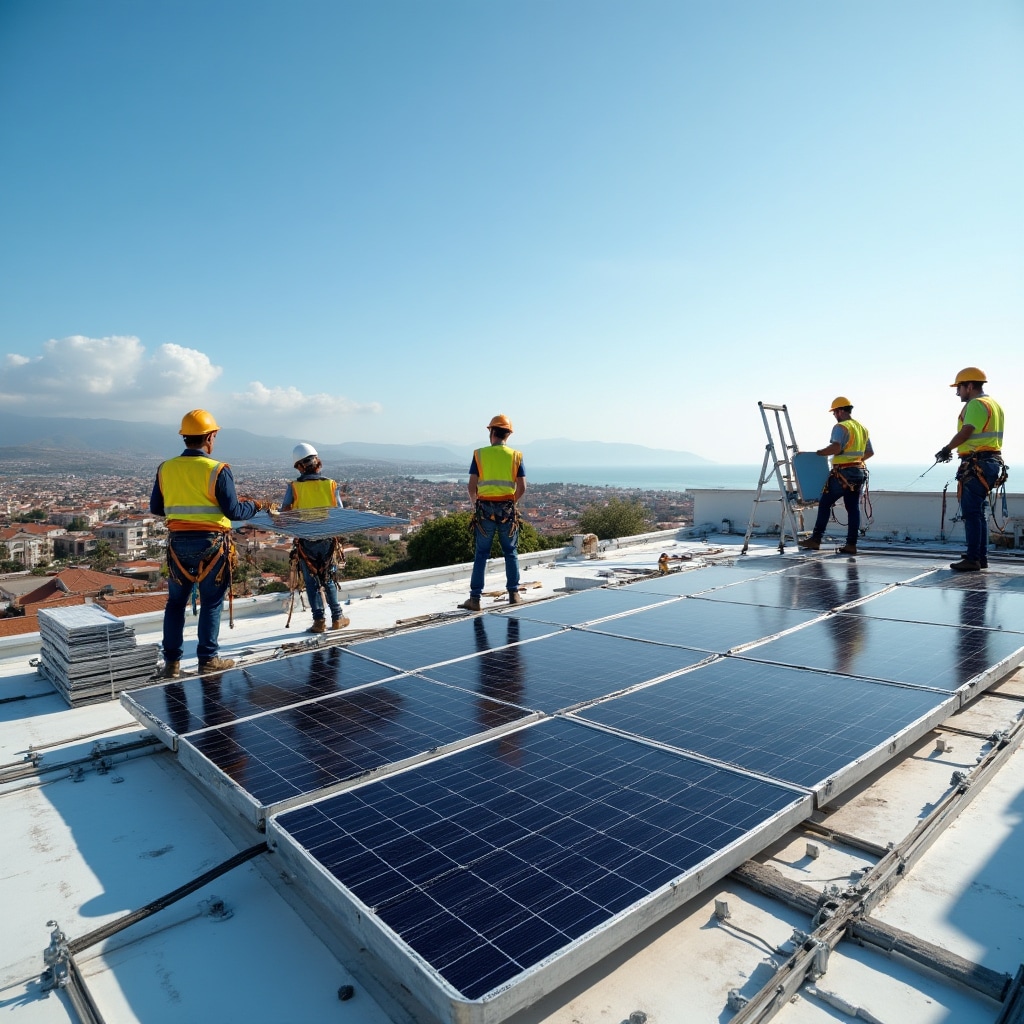
From Planning to Implementation
Our consulting process takes cooperative housing projects from initial concept through complete technical specifications ready for installer bidding. Here's how the process works and what you can expect at each stage.
Initial Consultation
We discuss your housing project, number of units, expected timeline, and goals for solar integration. This helps us understand project scope and determine if our consulting service is appropriate.
Site Assessment
Detailed evaluation of the property including solar radiation analysis, roof space measurement, shading documentation, and structural capacity review. This determines what system sizes are technically feasible.
Consumption Modeling
We calculate expected energy consumption for each housing unit based on size, appliances, heating/cooling needs, and occupancy patterns. This establishes how much generation capacity the project needs.
System Design
Complete photovoltaic system design including technology selection, capacity sizing, electrical configuration, and mounting specifications. All technical parameters are documented in detail.

Distribution Framework Development
One of the most important aspects of shared solar systems is establishing how generated energy will be distributed among housing units. This requires both technical calculations and policy decisions by the cooperative.
We present several distribution model options with their implications clearly explained. Models can be based on unit size, actual consumption, equal shares, or hybrid approaches. Each model has different effects on fairness perception, administrative complexity, and long-term flexibility.
The cooperative decides which model best fits their governance structure and member expectations. We then formalize this into a technical distribution agreement that can be implemented by the utility company and understood by all members.
This framework also addresses how new members are integrated, how departing members are handled, and how the system accommodates changing consumption patterns over time.
Working with Distribution Companies
Interconnection Requirements
Every shared solar system requires approval from the local distribution company. This involves submitting technical documentation, demonstrating compliance with electrical standards, and establishing the energy-sharing arrangement within their billing system.
Each utility has specific requirements and procedures. We handle all documentation preparation, submission, and follow-up communication. This includes electrical diagrams, equipment specifications, protection schemes, and the formal energy community agreement.
Timeline Considerations
Utility processing typically takes two to four months depending on the distribution company and project complexity. We coordinate this timeline with your construction schedule to ensure approvals are in place when needed.
Some utilities require multiple review stages. We manage this process and keep you informed of progress and any issues that arise requiring cooperative input or decisions.

Complete Technical Specifications
Equipment Specifications
Detailed requirements for all system components including panel types, inverter specifications, mounting hardware, and electrical protection equipment. Specifications include acceptable brands and models with technical justifications.
Installation Drawings
Complete electrical diagrams, panel layout drawings, mounting detail specifications, and conduit routing plans. These provide installers with everything needed to build the system as designed.
Distribution Agreement
Formalized energy allocation framework documenting how generation is distributed among units, cost allocation structure, and procedures for system management. This becomes part of the cooperative's governance documents.
Bidding Documents
Complete package that allows installers to provide accurate, comparable quotes. Includes scope of work, technical specifications, quality standards, and timeline requirements. Enables informed installer selection.
After Design Completion
Once we deliver complete technical specifications, the cooperative moves forward with installer selection and construction. Our consulting engagement typically concludes at this point, though we can provide additional services if needed.
Installer Coordination
We can review installer proposals to verify they meet design specifications and identify any deviations or concerns. This helps cooperatives make informed decisions when multiple bids are received with different approaches or pricing.
If technical questions arise during construction, we're available for consultation to clarify design intent or evaluate proposed modifications. This ensures the built system matches the design specifications.
System Commissioning
When installation is complete, systems undergo commissioning to verify proper operation. While installers typically handle this, we can provide independent verification that the system performs according to design parameters and meets all technical requirements.